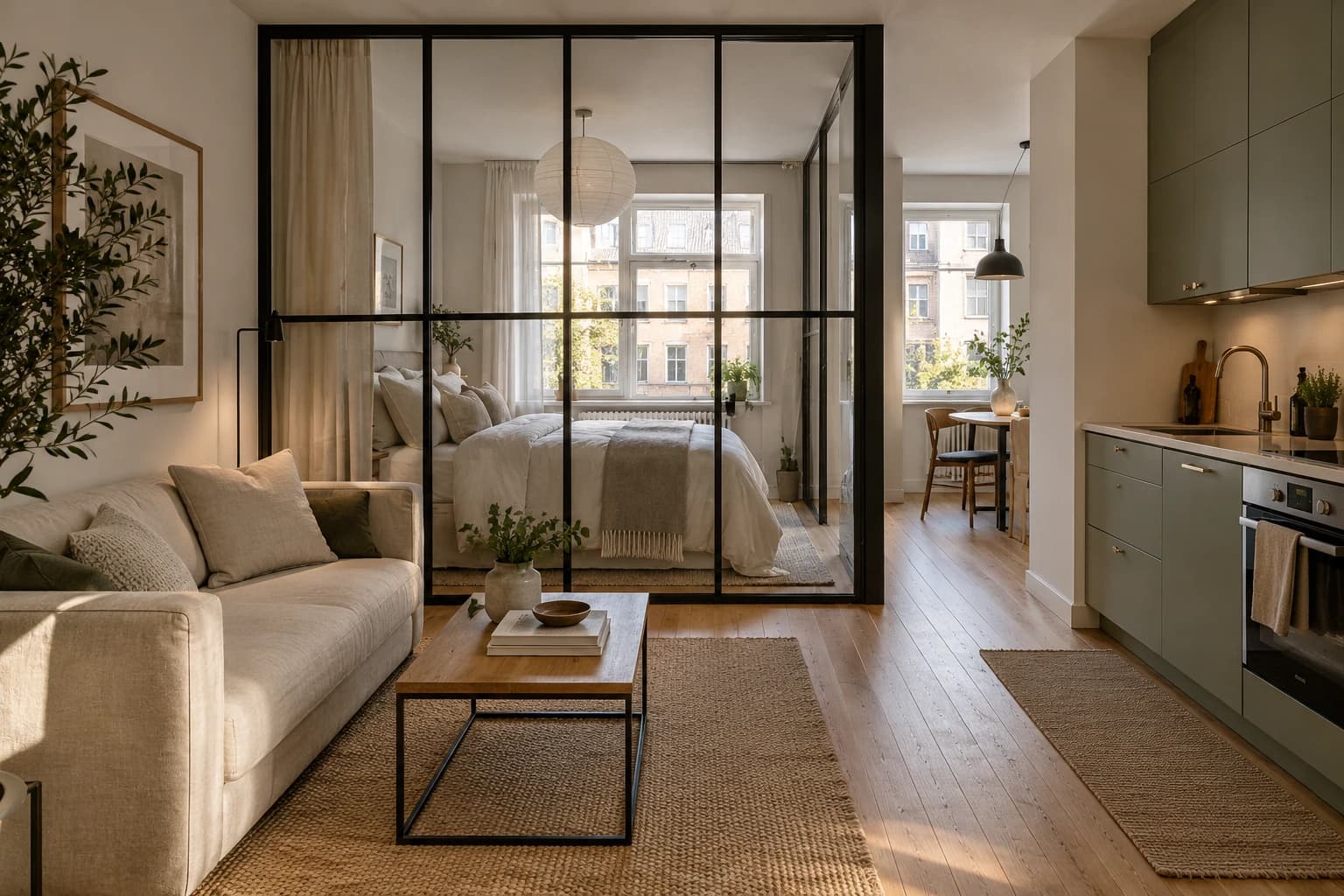
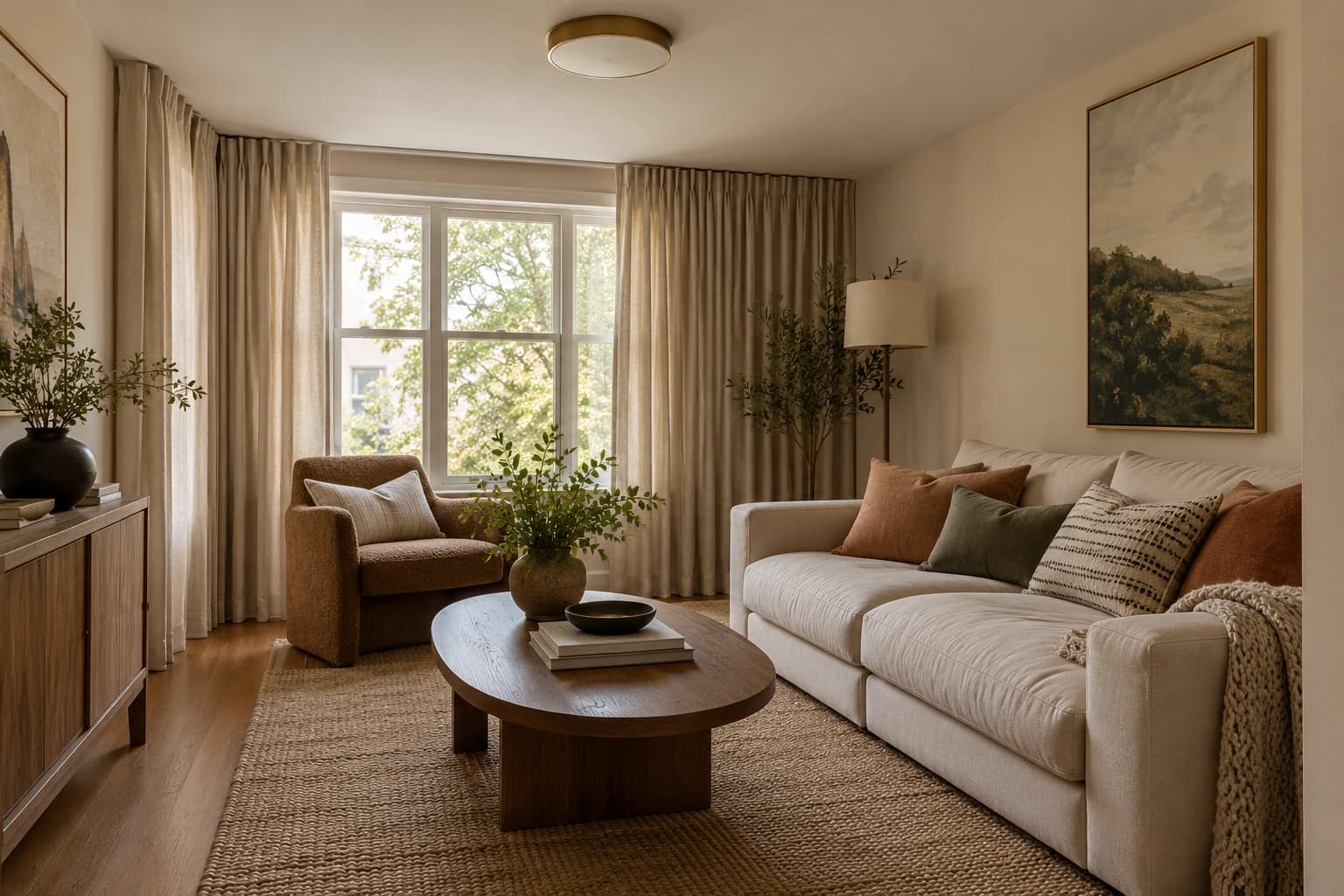
Decorating a small studio apartment works best when you treat the whole room as one scene: choose a single palette of three colors, one dominant style, and let rugs, lighting and textiles mark the zones instead of walls. Because sleeping, living and working all share one sight line, a studio punishes mixed signals more than any other home. This guide covers which styles suit a studio, the decor moves that matter most, and what to do if you rent.
Decorating Ideas for a Small Studio Apartment: Start With One Scene
In a one-bedroom, you can close a door on a style choice you regret. In a studio you cannot, because the bed, the sofa and the desk are all visible at once. That is why the first decision is not a style, it is a palette.
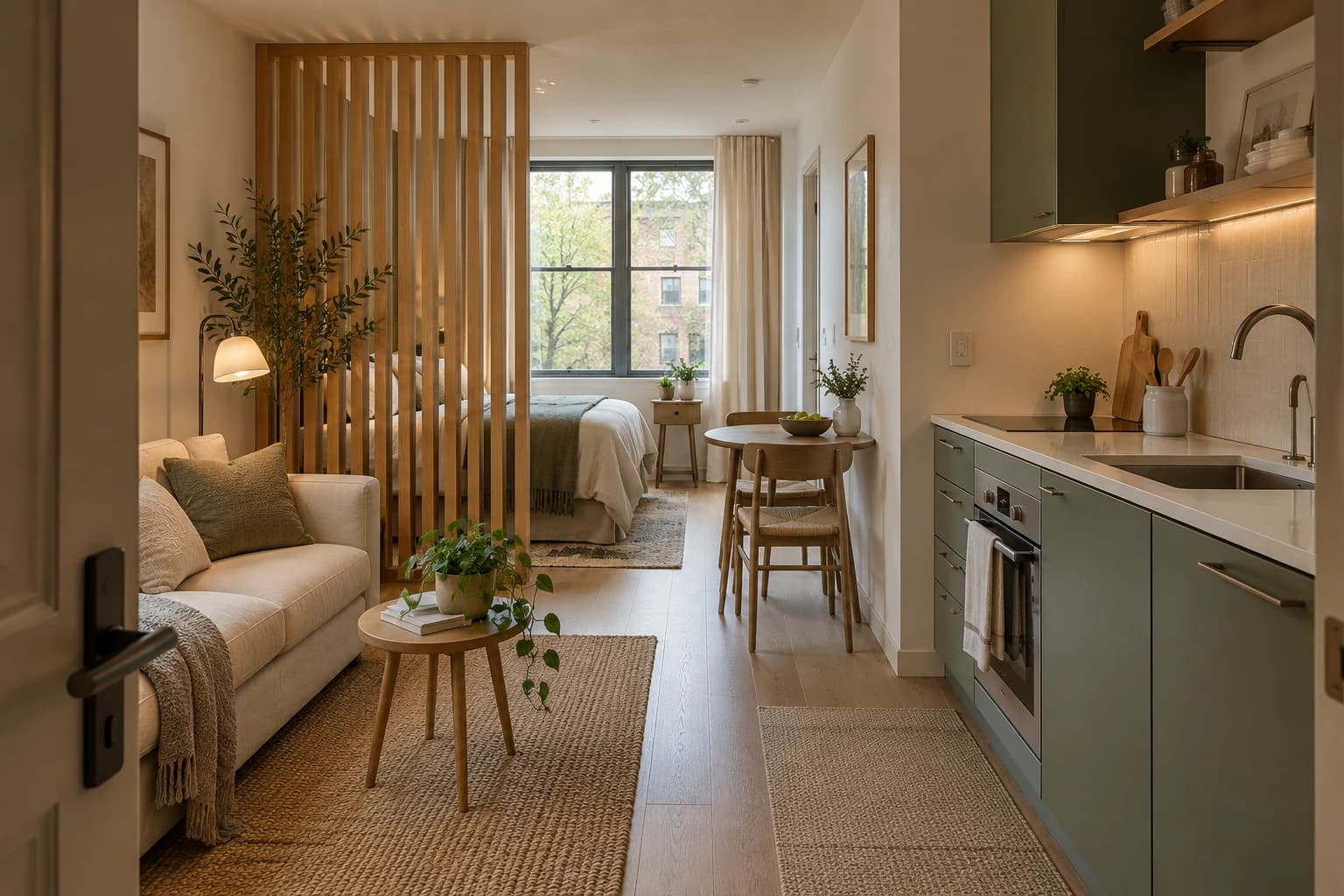
- Pick three colors: One dominant (usually a pale wall color), one secondary (wood or a mid-tone) and one accent. Repeat all three in every zone.
- Repeat one material: The same wood tone or metal finish in at least three places ties the zones together.
- Keep the biggest pieces calm: Put pattern and color in pillows, art and throws, which are cheap to change.
- Let the layout come first: Decor only works if the furniture is already in the right place. If you have not settled that, start with our studio apartment layout guide.
- Best for: Anyone starting from a bare studio or a room that feels chaotic.
- Why it works: A tight palette makes one room read as one space, which is what a studio needs.
- Watch out for: Using the same bright accent everywhere. Let it appear two or three times, not ten.
What is the correct order to decorate a studio?
Start with the layout, then the palette, then the largest pieces, then lighting, then rugs and curtains, and finish with art and styling. Each step depends on the one before it.
What are the must-haves for a studio apartment?
A bed you can close off visually, one comfortable seat, a surface that works as desk and table, storage that hides things, and light at three heights. Everything else is optional.
Which Style Suits a Studio? The Nine Styles, Matched to Studio Problems
Our guide to the best interior design styles for small spaces compares nine styles in detail. Here is how they map to the problems studio owners tend to have. The matches are our editorial judgment, not measured results.
| Your studio problem | Style to try | Why it fits | Watch out for |
|---|---|---|---|
| Visual clutter from living, sleeping and working in one room | Minimalist | Clear surfaces and built-in storage | Feeling cold; add one texture |
| Little natural light | Scandinavian | Pale walls and wood bounce light | Gray north-facing white; pick a warm white |
| The bed is the main thing you see | Japandi | Low furniture and quiet palette | Low seats that are hard to stand from |
| You want it to feel like a home, not a dorm | Warm modern | Soft edges and earthy color | Too many earth tones |
| You rent and cannot paint | Scandinavian or bohemian | Both lean on textiles, not paint | Pattern overload in bohemian |
| You have lots of belongings | Bohemian or industrial | Open display makes storage part of the look | Floor-level clutter |
| You are in a loft or have high ceilings | Industrial | Hard surfaces suit the structure | Echo; add rugs and wood |
If you are not sure, the 12-question small-space style quiz scores all nine styles against your room.
Studio decorating ideas by zone
Whatever style you choose, each zone needs its own small signal. These are the cheapest ways to give each one an identity.
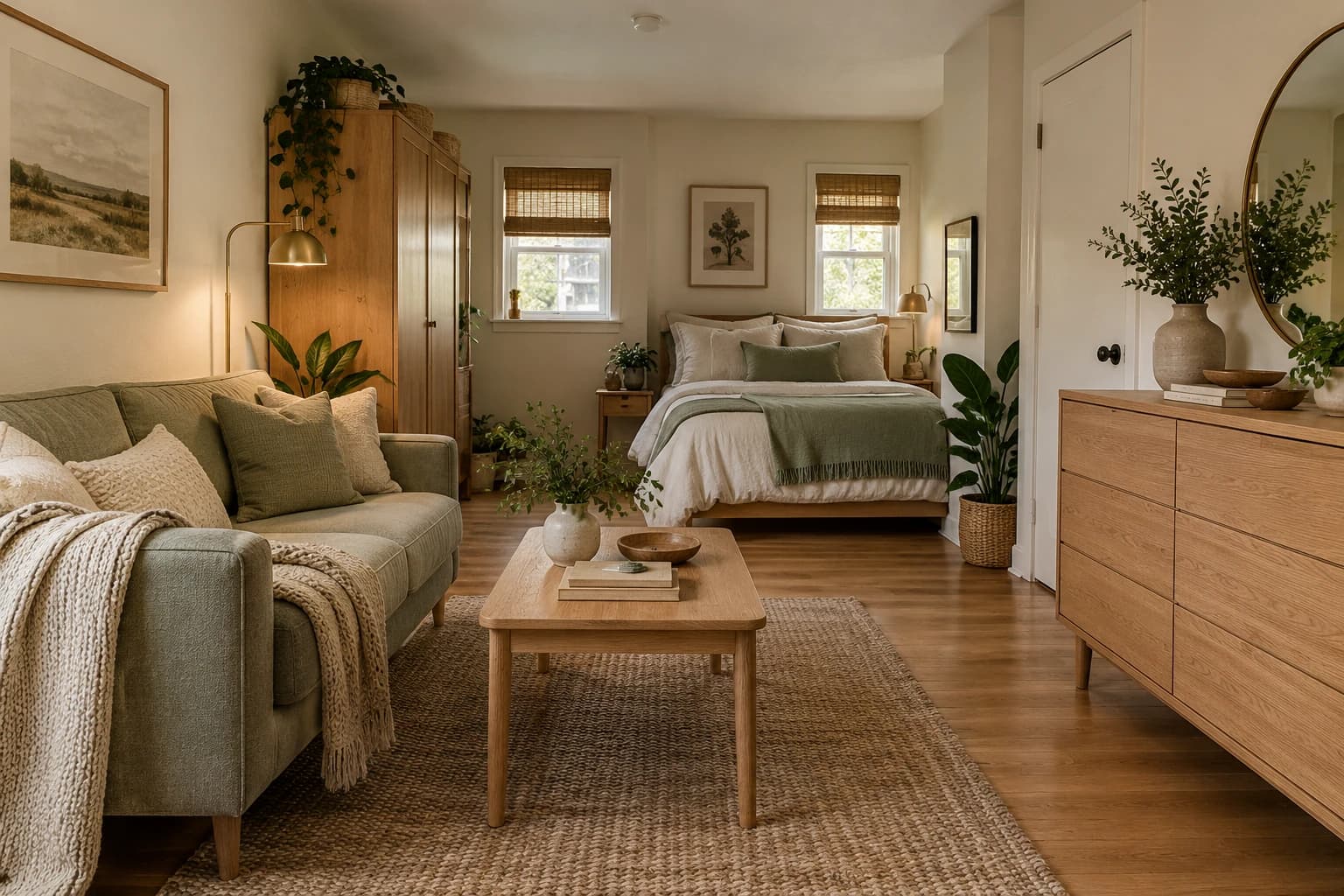
- Sleeping zone: A headboard, a rug under the bed and a separate lamp. A curtain on a ceiling track gives privacy for guests.
- Living zone: A rug sized so that the front legs of the sofa sit on it, plus one piece of art above the sofa.
- Work zone: A task lamp and a plant, and a tray or box that lets you clear the desk at the end of the day.
- Entry: A hook rail, a mirror and a narrow shelf. It gives the room a threshold even without a door.
What is the 3-5-7 rule, and does it work in a studio?
It is a styling guideline that groups objects in odd numbers, usually three, five or seven. In a studio, use it on one shelf and one table, and keep each group small so the room does not read as busy.
Style sets the mood, but color and light decide how the room feels.
Color and Light: Make the Room Feel Bigger
Light colors reflect more daylight, and every zone benefits from it. Paint makers often point to the light reflectance value (LRV) printed on a color chip, and Sherwin-Williams suggests colors above about LRV 65 for small rooms. We cover that in more detail in the paint reflectance and undertone guidance.
- Keep windows clear: Do not put a tall bookcase or divider in front of a window. It is the main source of light for every zone.
- Layer three kinds of lighting: One overhead or ceiling source, one task lamp at the desk and one soft lamp near the bed.
- Use mirrors: A large mirror placed opposite or beside a window doubles the daylight, a tip that appears in many designer guides.
- Hang curtains high: Mount the rod near the ceiling to suggest a taller room.
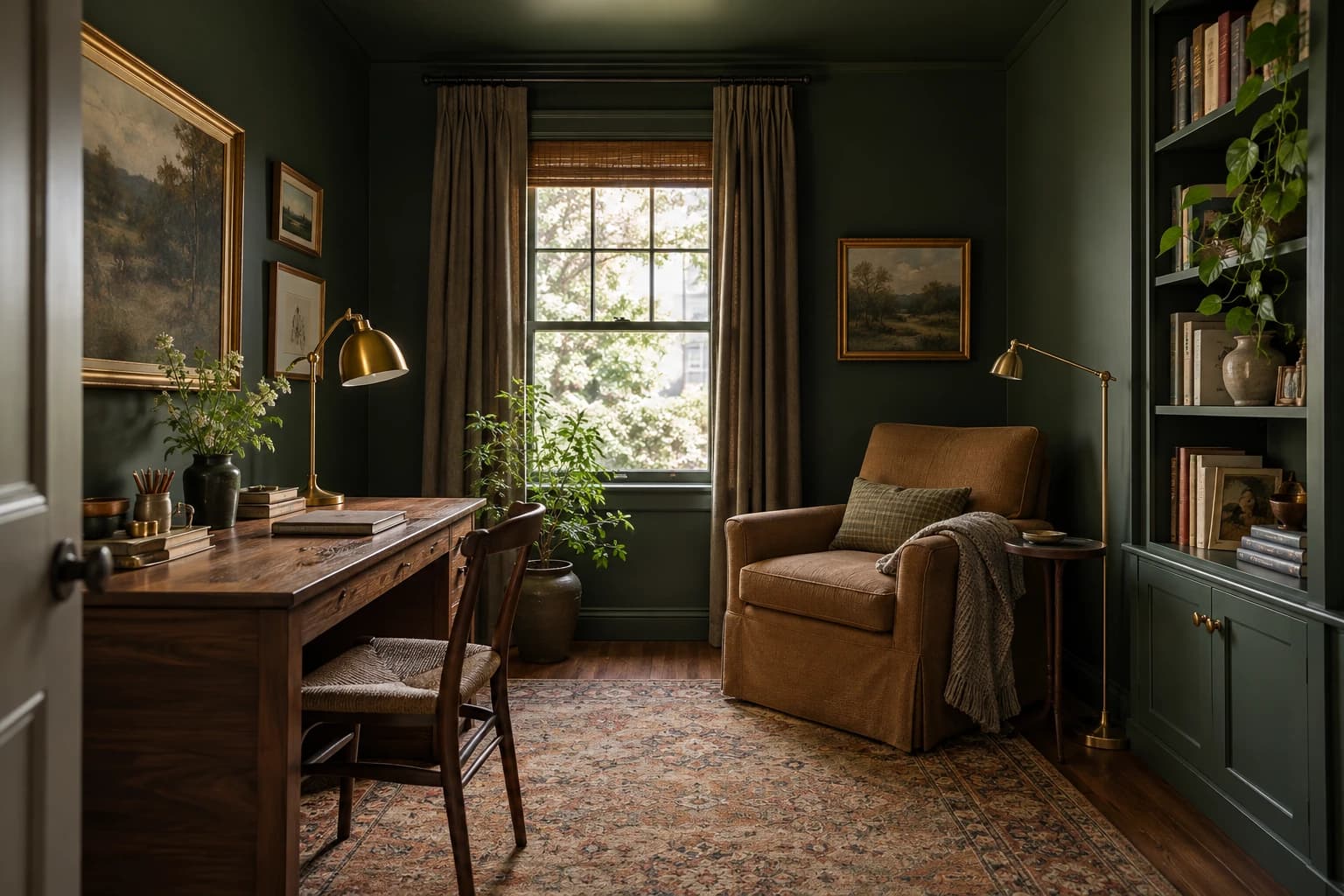
For rooms with little daylight, a deliberate dark wall behind the bed can work as a feature, but only if the rest of the room stays light. See our guide to dark paint in a small room.
What colors are best for decorating a studio apartment?
A pale, warm neutral on the walls, a second tone in the furniture and one accent. The 60-30-10 rule describes that split as roughly 60 percent dominant color, 30 percent secondary and 10 percent accent, and designers treat it as a guideline rather than a formula.
How do you make a studio apartment look more expensive?
In our editorial view, it comes down to a tight palette, fewer and larger pieces, a rug big enough for the seating, curtains hung high and warm bulbs instead of a single harsh ceiling light. Repeating one wood or metal finish helps too.
Decorating a Small Studio Apartment as a Renter
If your lease limits paint and holes, the safest decor moves are the reversible ones. Guides for renters agree on a short list.
- Peel-and-stick wallpaper: One accent wall behind the bed can mark the sleeping zone. Check the product's removal instructions first.
- Plug-in or hanging lamps: Wall sconces that plug into an outlet add light without wiring.
- Freestanding storage: Tall shelving and a wardrobe replace built-in closets.
- Rugs and curtains: These cover floors and walls you cannot change.
- Command-style hooks: For art, if your lease allows them.
Reversible changes also protect your deposit. Check your lease before you start, since rules vary.
- Best for: Renters and anyone who moves often.
- Why it works: You carry every piece with you.
- Watch out for: Wallpaper on textured walls, which tends to peel badly.
Storage That Looks Like Decor
In a studio, storage and decor are the same thing, because everything you own is on show. Choose storage that you would be happy to look at.
- Under the bed: Drawers or lidded boxes hold off-season clothes.
- Over the door and up the wall: Tall shelving to the ceiling uses height that is otherwise wasted.
- A closed cabinet near the kitchen: It hides small appliances and clutter from the bed.
- An ottoman with a lid: It is a seat, a coffee table and a blanket box.
Edit the items on display. A rule that works is to keep two thirds of any shelf empty or styled, and put the rest in closed storage.
Decor Mistakes That Make a Studio Feel Smaller
- Too many small pieces: The dollhouse effect mentioned in our style guide makes a room look smaller. Fewer, bigger pieces work better.
- Mixed metals and woods everywhere: One or two finishes read as intentional.
- Pushing everything to the walls: It leaves a dead center. Float the sofa if you can.
- Ignoring the ceiling: Tall plants, high curtains and wall lamps draw the eye up. Our guide to low ceiling decorating ideas goes deeper.
- Stopping at the studio: The same principles apply across a home; see our overview of small apartment decorating ideas.
The SCENE Method: Five Rules for a Studio That Reads as One Room
SCENE is our editorial shorthand for the rule at the top of this guide: in a studio, every zone is visible at once, so the decor has to behave like one scene. The average new US studio is about 460 square feet, so there is no room for a zone that argues with the next one.
| Letter | Rule | In practice |
|---|---|---|
| S: Single palette | Three colors, split roughly 60-30-10 | Pale wall, wood furniture, one accent |
| C: Cap the contrast | One high-contrast pairing in the whole room | A dark headboard wall or a black lamp, not both |
| E: Edit the big pieces | Fewer, larger items | One sofa, not two loveseats |
| N: Nest the zones | Mark each with a rug and a lamp | Light and floor, not walls |
| E: Echo one material | Repeat a wood or metal in three places | Ties bed, desk and sofa together |
Our take: In a studio, decor is a layout tool. A rug and a lamp do the work a wall would do, and cost less than moving furniture.
The Bottom Line
Decorating a small studio apartment comes down to one palette, one lead style and small signals for each zone. Pick the style that matches your biggest problem, whether that is clutter, low light or a lease that forbids paint, and keep the large pieces calm. Then use rugs, lamps and textiles to mark the zones.