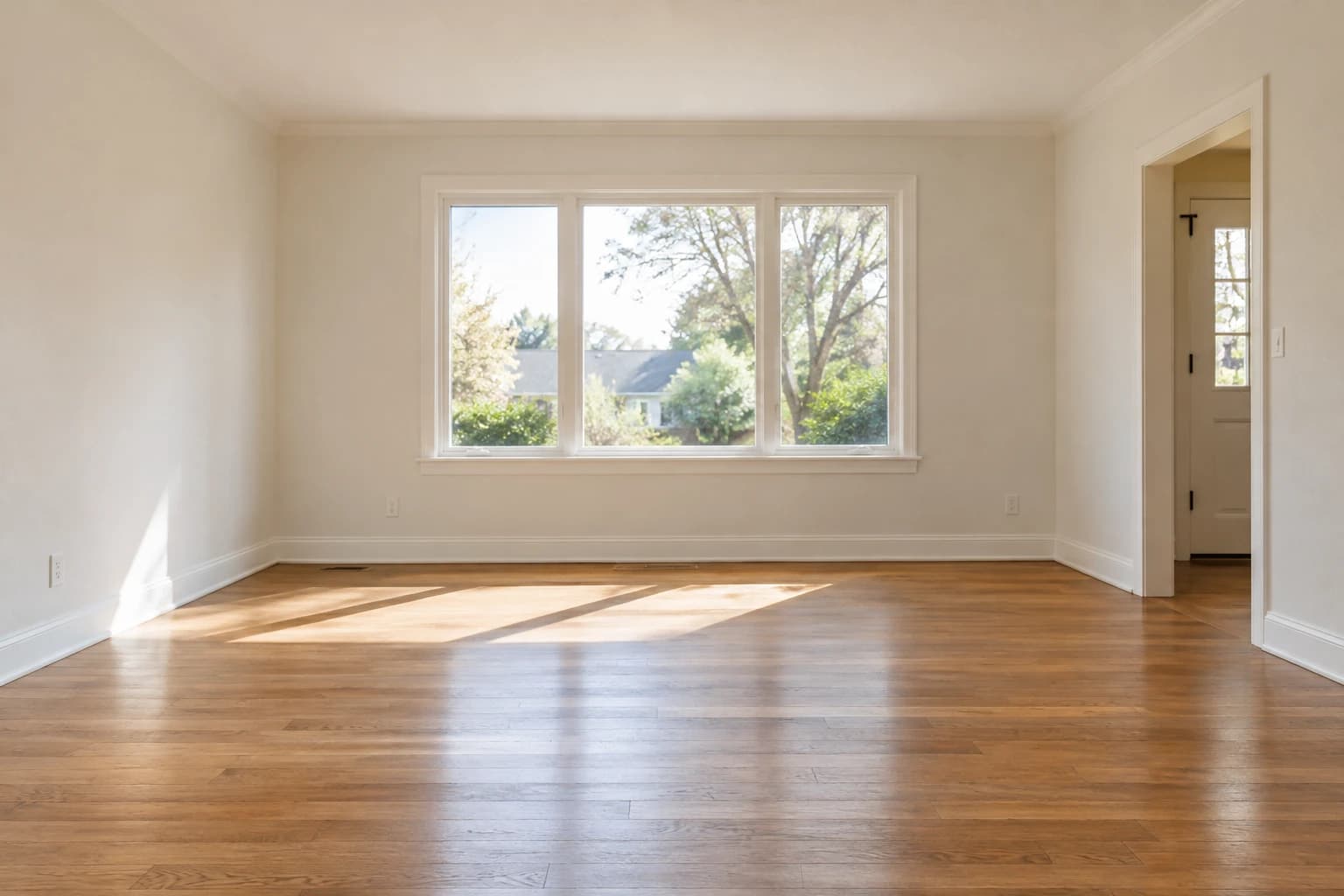

Virtual home staging costs a few dollars a photo, yet in NAR's 2025 survey 60% of sellers' agents rated it less important to their clients than traditional staging. The gap is not about price. It is about what buyers do after they click the photo.
Virtual home staging puts digital furniture into listing photos, while physical staging puts real furniture in the home. Each solves a different problem, and the right choice depends on who will walk through the rooms.
If you are an agent weighing the two, our guide to virtual staging for realtors covers workflow and rules in more detail. Here is what we will cover:
- A side-by-side comparison of cost, speed and buyer experience.
- What NAR's survey of agents says about each approach.
- When to choose virtual, physical or a mix of both.
- The disclosure rules that apply to virtually staged photos.
First, the comparison at a glance.
Virtual Staging vs Physical Staging at a Glance
Physical staging changes the home buyers visit, and virtual staging changes only the photos they see online. That one difference drives almost everything else.
| Virtual staging | Physical staging | |
|---|---|---|
| What it is | Furniture added to photos digitally | Rented furniture and decor placed in the home |
| Typical cost | From under $1 to about C$30 per photo on published vendor pricing | NAR median: $1,500 with a staging service, $500 when the agent stages |
| Turnaround | Minutes for AI tools, about 48 hours for human editors | Days to schedule and install |
| Seen at showings | No | Yes |
| Main risk | Buyers feel misled if the room looks different in person | Rental fees add up if the listing sits |
The cost figures come from vendor pricing pages and NAR's report, and they change often. Treat them as a range, not a quote.
What Agents Say About Each Approach
NAR's 2025 Profile of Home Staging asked agents how important various marketing tools are to their clients. Virtual staging ranked low with both groups of agents.
| Rated "less" or "much less" important | Buyers' agents | Sellers' agents |
|---|---|---|
| Virtual staging | 51% | 60% |
Only 16% of sellers' agents and 18% of buyers' agents rated virtual staging as more important than other tools. By comparison, 43% of sellers' agents rated traditional physical staging as much more or more important to their clients.
The survey had 1,266 usable responses and a 2.5% response rate, so read it as a signal, not a verdict. It also does not say why agents answered this way.
Do homes sell better empty or staged?
Staged homes tend to perform better in agents' reports, but the evidence is opinion data, not a controlled test. Eighty-three percent of buyers' agents said staging made it easier for buyers to picture the home as their own.
How much quicker do staged homes sell?
Among sellers' agents, 49% said staging reduced time on market: 30% saw a slight decrease and 19% a large one. Another 17% saw no effect, and 4% said staging greatly increased time on market.
Some coverage reports 29% of agents seeing a 1% to 10% higher offer. That figure adds the 19% who saw a 1% to 5% increase and the 10% who saw 6% to 10%, from the same survey.
What Virtual Staging Real Estate Listings Really Cost
Virtual staging is cheap per photo, and physical staging is cheap per showing only if the listing sells quickly. Published prices on vendor pages show how wide the range is.
- AI subscription: One vendor's standard plan works out to $0.95 per photo, and its smallest plan to $2.67.
- Human editors: BoxBrownie lists C$30 per image with a 48-hour turnaround.
- Physical staging: NAR's median is $1,500 when a staging service is used, plus rental fees if the listing runs long.
How much does virtual home staging cost?
Expect roughly $1 to $30 per photo, depending on whether software or a human editor does the work. For a listing with six staged rooms, that is a few dollars to about C$180.
What is the cheapest way to stage a house?
Decluttering and cleaning, which agents recommended most often in NAR's survey at 91% and 88%. They cost time instead of money, and they help in both photos and showings.
When to Choose Virtual, Physical or Both
Choose by asking one question: will buyers see these rooms in person? If yes, physical staging protects the showing. If no, or if the home is vacant and the budget is tight, virtual staging fixes the photos.

| Situation | Better fit | Why |
|---|---|---|
| Vacant home, buyers will tour | Physical, at least in key rooms | The showing needs furniture too |
| Vacant home, tight budget | Virtual for photos, plus clear labeling | Cheapest route to better photos |
| Occupied home | Editing and decluttering | Furniture already exists |
| Luxury listing | Physical | Buyers inspect finishes and scale in person |
| Vacant home that will be sold sight unseen | Virtual, with disclosure | Photos are the only showing |
This table is our editorial judgment, not a survey result.
Can you combine both?
Yes, and it is a common compromise. Physically stage the rooms buyers value most, which NAR's survey puts as the living room (37% of buyers' agents), the primary bedroom (34%) and the kitchen (23%). Virtually stage the rest only if the photos need it.
Is Virtual Staging Legal, and Do You Have to Disclose It?
Virtual staging is legal, but disclosure rules are spreading and they vary by state and MLS. California's AB 723 requires disclosure of digitally altered listing images, and Wisconsin's requirement takes effect January 1, 2027, according to The Close.
Some MLSs go further. MLS Now allows virtual staging limited to movable items, with disclosure, and prohibits altering permanent features such as walls or windows. Northstar MLS's proposed guidelines call for labels and an unaltered photo of each staged room.
Ask your MLS and brokerage which rules apply before you order edited photos. This is general information, not legal advice.
How to Brief a Virtual or Physical Stager
A good brief prevents most disappointment, whichever route you choose. Give the same information to a software tool, a human editor or an on-site stager.
- Who the buyer is: A first-time buyer and a downsizer want different rooms.
- Which rooms matter: Start with the living room, primary bedroom and kitchen, the three NAR's buyers' agents ranked highest.
- What must not change: Walls, floors, windows and fireplaces stay as they are.
- How it will be labeled: Agree on the caption and the unaltered photo up front.
- What happens at showings: Say whether buyers will see real furniture or none.
- Best for: Sellers and agents ordering staging for the first time.
- Why it works: It turns a vague style request into something a vendor can check.
- Watch out for: Vendors who skip the labeling step. It is your responsibility as well as theirs.
What Happens When the Room Looks Different in Person
The main complaint about virtual staging is the gap between the photo and the room. A buyer who loves a digitally furnished room and then finds it empty may feel misled.
Two habits close the gap. Label the photo clearly, and use furniture sized for the room so the scale is believable. In NAR's survey, 83% of buyers' agents said staging helps buyers picture a home, which is the effect you are trying to keep without overpromising.
The SEEN Test: Four Questions That Decide It
SEEN is our editorial test for choosing between virtual and physical staging. It reflects how the NAR figures line up: physical staging is rated more important to clients, and virtual staging is a photo tool.
| Letter | Question | Leans |
|---|---|---|
| S: Showings | Will buyers walk through these rooms? | Yes: physical |
| E: Expectation | Will the room match the photo in person? | No: label it or skip |
| E: Edits | Do permanent features stay untouched? | No: do not use |
| N: Notice | Will every staged photo be labeled? | No: do not publish |
What the data says about where the money goes: NAR's median physical staging cost of $1,500 equals about 1,579 AI-staged photos at $0.95 each. The cheap option is not the issue, since 51% of sellers' agents in the survey did not stage at all but suggested decluttering and fixes, and only 8% staged virtually and nothing else.
Our take: Virtual staging is a camera trick, not a staging strategy. Use it where the photo is the only showing, and use real furniture where people will stand in the room.
The Bottom Line
Virtual home staging is the cheaper way to fix photos, and physical staging is the way to fix the showing. Most agents in NAR's survey put physical staging ahead, so use virtual staging deliberately, label it clearly and keep it for photos buyers will never walk through.
If you would like help from a professional, you can compare home staging companies by city and service, then review comparable projects before requesting quotes.
Sources
- 2025 Profile of Home Staging, NAR
- How Far Can Agents Edit a Listing Photo? New MLS Rules Draw the Line, The Close
- MLS Now Rules: Section 3, Images, Media and Virtual Staging
- Guidelines for Virtual Staging and AI-Enhanced Listing Photos, Northstar MLS
- Virtual Staging AI pricing
- Virtual staging, BoxBrownie