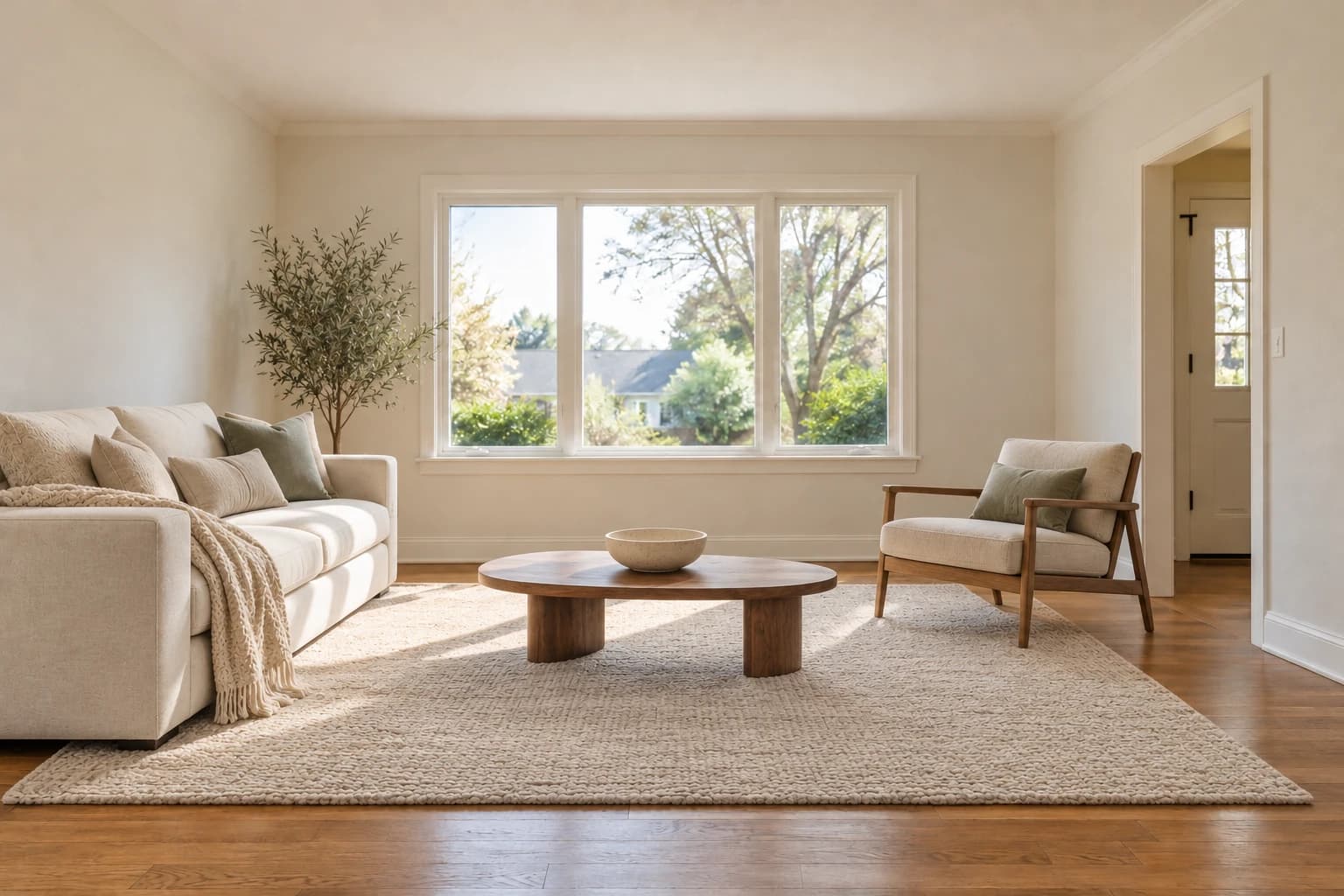
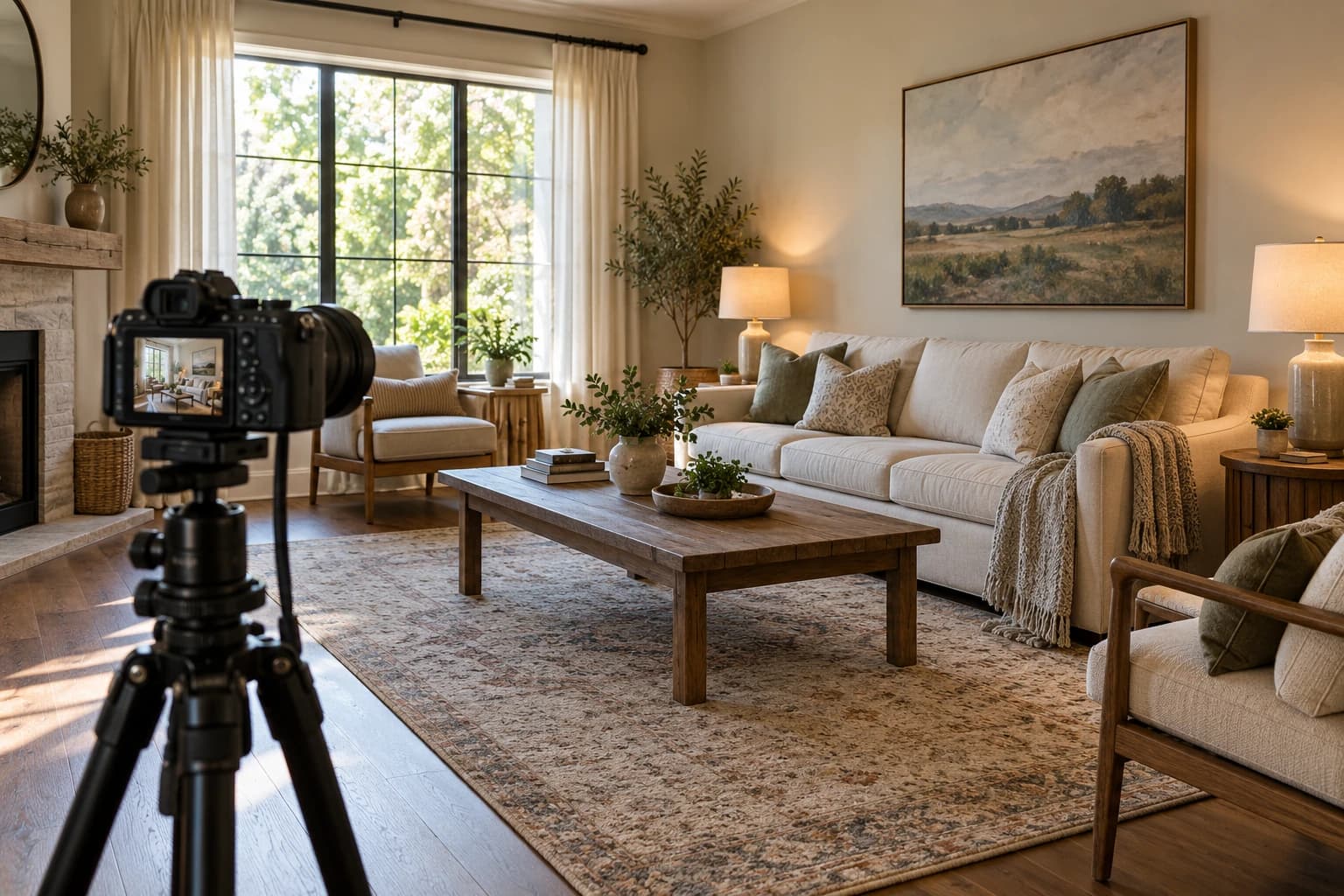
The best tips for staging a house to sell are the cheap ones: in NAR's 2025 survey, agents recommended decluttering (91%) and a whole-home clean (88%) more often than any paid fix. Stage the living room, primary bedroom and kitchen first, and put your money into the rest only if you have it.
Most staging advice is a long list with no order. This guide ranks the tips by how often agents recommend them, then shows what changes in a before-and-after.
If your goal is photos, our guide to staging a home for real estate photos adds camera-specific steps. Here is what we will cover:
- Which rooms to stage first, with numbers from NAR's survey.
- Twelve tips in priority order.
- A before-and-after checklist.
- The mistakes that cost sellers the most.
First, what agents say to do.
What Agents Recommend Most
NAR asked sellers' agents which home improvements they recommend before listing. The top three are free or low-cost.
| Recommendation | Share of sellers' agents |
|---|---|
| Declutter the home | 91% |
| Clean the entire home | 88% |
| Improve curb appeal | 77% |
These come from NAR's 2025 Profile of Home Staging. The same report found that 83% of buyers' agents said staging made it easier for buyers to picture the home as their own.
Which Rooms to Stage First
Stage the rooms buyers weigh most. Buyers' agents ranked the living room first (37%), the primary bedroom second (34%) and the kitchen third (23%).
Sellers' agents said they most often stage the living room (91%), primary bedroom (83%) and dining room (69%). Buyers' agents ranked the guest bedroom last, with just 7% calling it very important to stage.
12 Tips for Staging a House to Sell
These tips are in order of priority, with the cheapest first. The order is our editorial judgment, informed by the NAR figures above.
1. Declutter until surfaces are nearly clear
Clear counters, shelves and tables, and box what you remove. A room with fewer things looks larger.
2. Deep clean everything
Clean windows, floors, baseboards and grout. A clean home reads as a cared-for one.
3. Depersonalize, but keep it warm
Remove family photos and collections, and keep a plant or a throw. Buyers should see themselves in the rooms.
4. Fix the small things
Repair leaks, loose handles and chipped paint. Minor repairs were among the common recommendations in NAR's survey.
5. Improve curb appeal
Mow, edge, weed and clean the front door. Buyers see the outside before the inside.
6. Neutralize the walls
Cover bold colors with soft neutrals. Touch-ups and repainting were both common recommendations.
7. Arrange furniture for flow
Pull furniture off the walls into conversation groups and clear walkways. Too much furniture makes a room look smaller.
8. Maximize light
Open blinds, clean windows and use matching warm bulbs. Light makes rooms look larger.
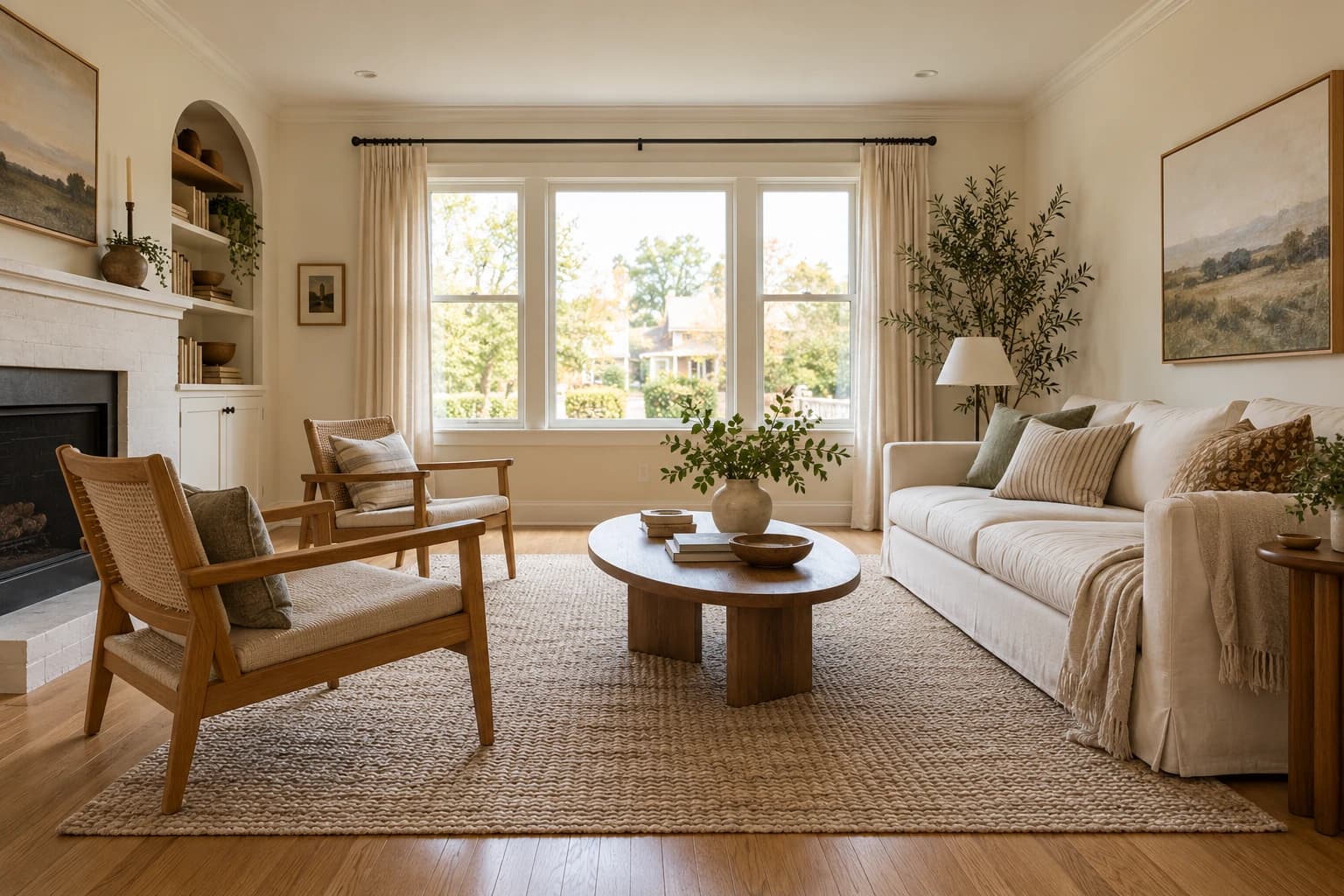
9. Style the living room first
Keep one sofa, one or two chairs, a rug and a lamp. It is the room buyers' agents ranked most important.
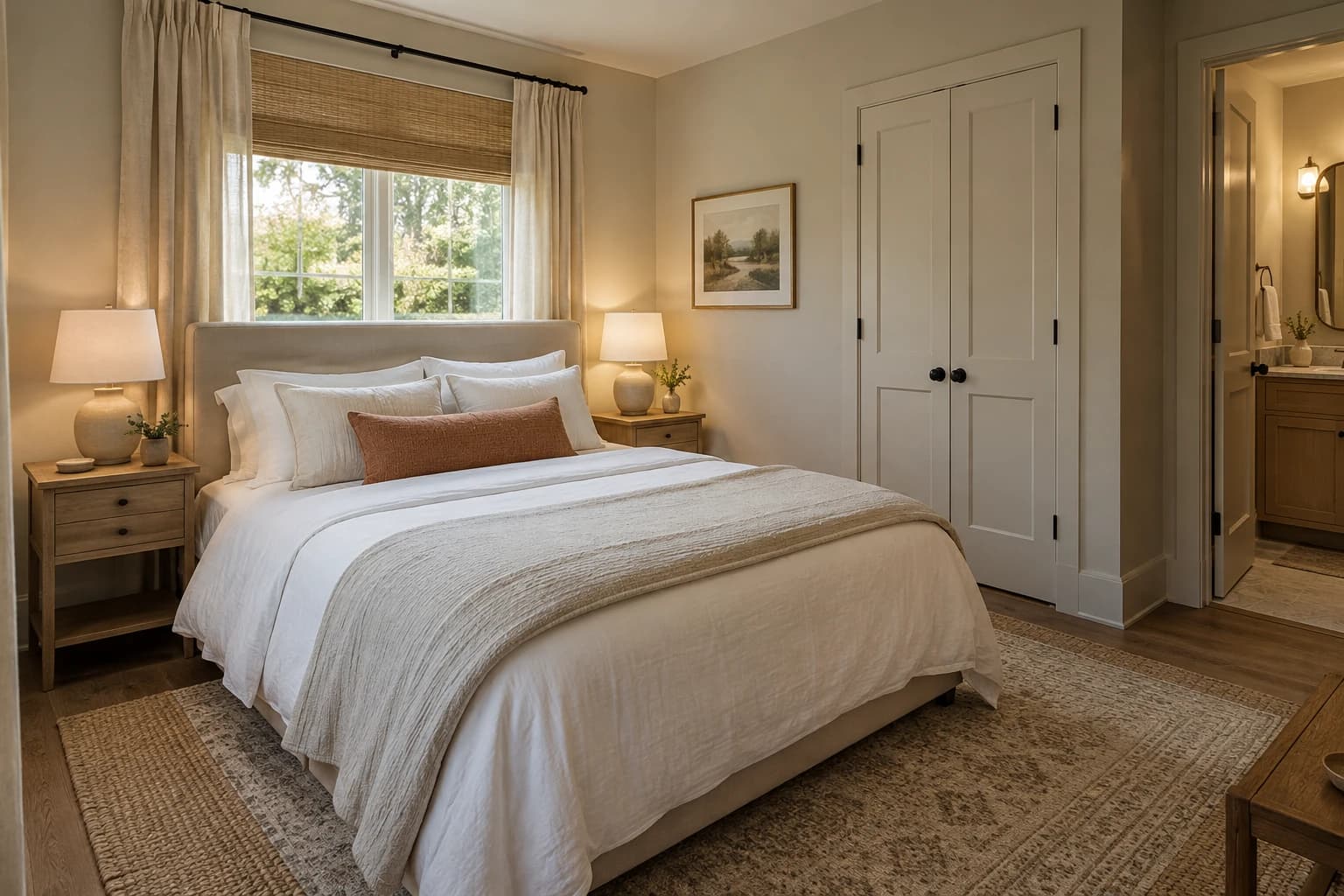
10. Make the primary bedroom feel like a retreat
Use hotel-style bedding, clear nightstands and remove clutter from the closet doors. It was second in importance.
11. Keep the kitchen simple
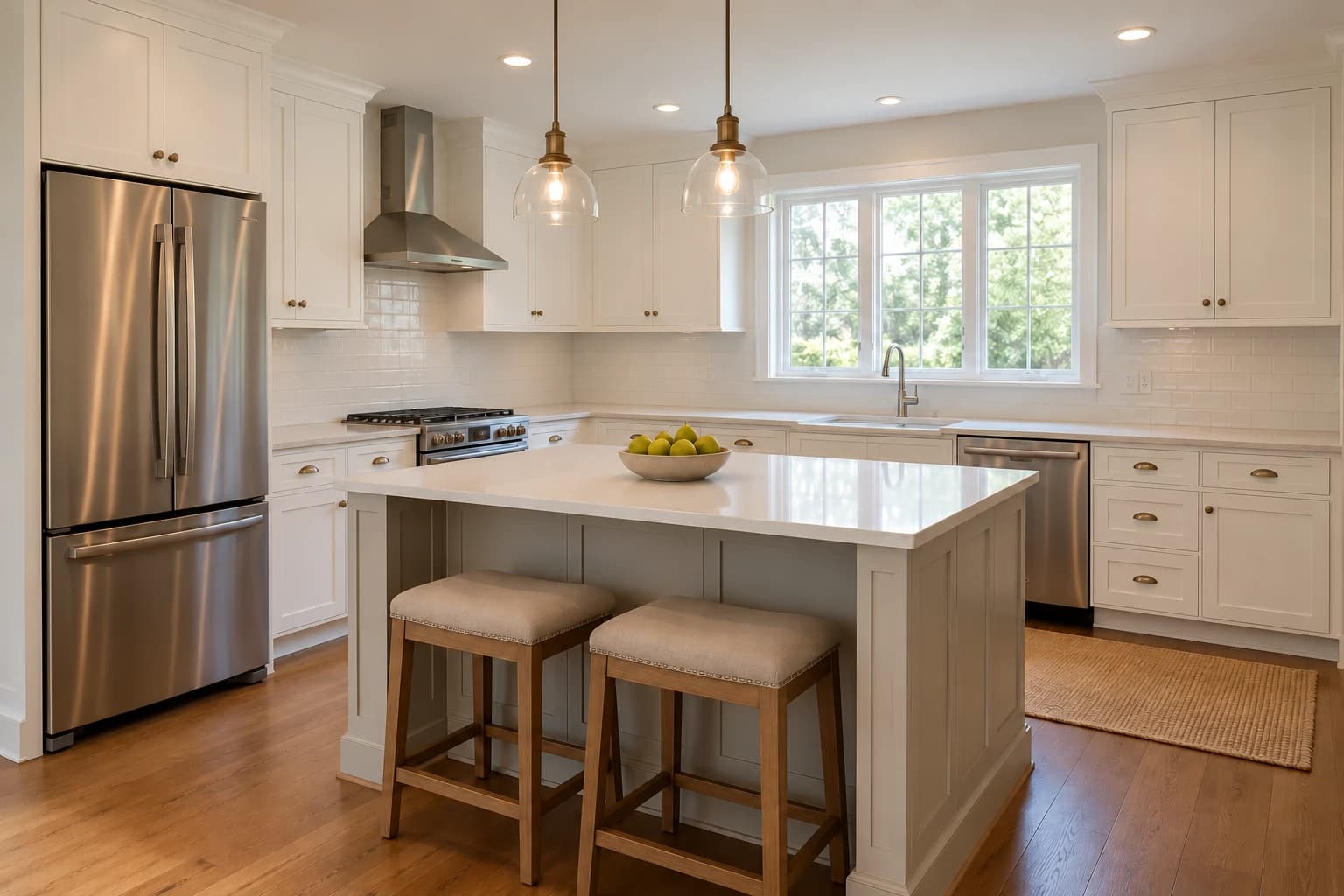
Clear counters, add one prop such as a bowl of fruit, and remove magnets and papers from the fridge.
12. Stage the entry
Add a rug, a mirror and a clean console. It is the first thing buyers see inside.
Staging a House to Sell: Before and After
A good before-and-after changes the same room in six ways, and none needs new furniture. Use this as a checklist when you review your own photos.
| Look at | Before | After |
|---|---|---|
| Counters | Appliances, mail and small items | Nearly clear, with one prop |
| Furniture | Pushed to walls, extra pieces | Grouped, with clear walkways |
| Walls | Bold color, family photos | Soft neutral, one or two pieces of art |
| Light | Closed blinds, mismatched bulbs | Open windows, matching warm bulbs |
| Floors | Cluttered, worn rugs | Clear and clean |
| Entry | Shoes and coats | A rug, a mirror and nothing else |
Take a photo of each room before you start and one after, then compare them on your phone. Anything that still looks busy needs another pass.
The Staging Gap: Where Effort and Importance Do Not Match
NAR's survey asked buyers' agents which rooms matter most and sellers' agents which rooms they stage. Putting the two next to each other shows where effort and importance line up.
| Room | Staged by sellers' agents | Very important to buyers' agents |
|---|---|---|
| Living room | 91% | 37% |
| Primary bedroom | 83% | 34% |
| Dining room | 69% | Not in the top three |
| Kitchen | 68% | 23% (third) |
| Guest bedroom | 22% | 7% (least) |
Our take: The dining room is staged more often than the kitchen even though buyers' agents ranked the kitchen third. If your budget is tight, do the kitchen before the dining room.
The honest limits: Forty-one percent of buyers' agents said staging had no impact on the dollar value offered, and 51% of sellers' agents do not stage before listing, suggesting decluttering and fixes instead. Staging is no guarantee, so start with the free baseline: declutter (91%), clean (88%) and curb appeal (77%).
Home Staging Mistakes to Avoid
Common mistakes come up across agent and consumer sources. Most are about taste, scale and timing.
What are the biggest home staging mistakes?
The biggest are staging for your own taste instead of the likely buyer, leaving personal items out and using too much furniture. Others include leaving rooms empty, ignoring photos and waiting until after listing.
What not to do when staging a house?
Do not hide defects, over-decorate or use dark, bold colors. Do not wait until after the photos to stage, since buyers see the listing online first.
Do most realtors pay for staging?
Not routinely. In NAR's survey, 21% of sellers' agents stage all listings, 10% only stage homes that are hard to sell, and compensation depends on the situation for 26%.
What makes a home look cheap?
In our editorial view, it is clutter, worn finishes and a lack of light. Fixing those three does more than buying decor.
Should You Hire a Stager?
Hire help if you are moving out of a vacant home or if you cannot edit your own space. NAR's median cost was $1,500 when a staging service was used and $500 when the agent staged, so compare quotes with what you can do yourself.
For an empty home, vacant home staging companies furnish key rooms, and for a lived-in home, occupied home staging focuses on editing what you own. If you cannot stage physically, see how virtual home staging compares with physical staging.
Staging a House to Sell on a Budget
You can stage most of a home for the cost of supplies. NAR's median spend was $500 when the agent staged and $1,500 when a staging service was used, so the free and low-cost steps are worth finishing first.
| Budget | What to do | Cost |
|---|---|---|
| Free | Declutter, clean, rearrange, depersonalize, open blinds | Time |
| Under $100 | Matching bulbs, a bath mat, fresh towels, one plant, touch-up paint | Supplies |
| A few hundred | Paint a dated room, a new rug, new hardware | Materials |
| Professional | A staging service for key rooms | NAR median $1,500 |
These tiers are our editorial grouping, and only the NAR figures are measured.
When to Start Staging
Start before the photographer is booked, not after. Decluttering and repairs take longer than expected, and buyers see the listing online first. A two-week runway is realistic for most homes, and the photo-day countdown in that guide lays out the steps.
The Bottom Line
Start with the free tips: declutter, clean and improve curb appeal. Stage the living room, primary bedroom and kitchen first, and only then spend on furniture or help.
If you would like a professional to look at your home, you can compare home staging companies by city and service, then review comparable projects before requesting quotes.