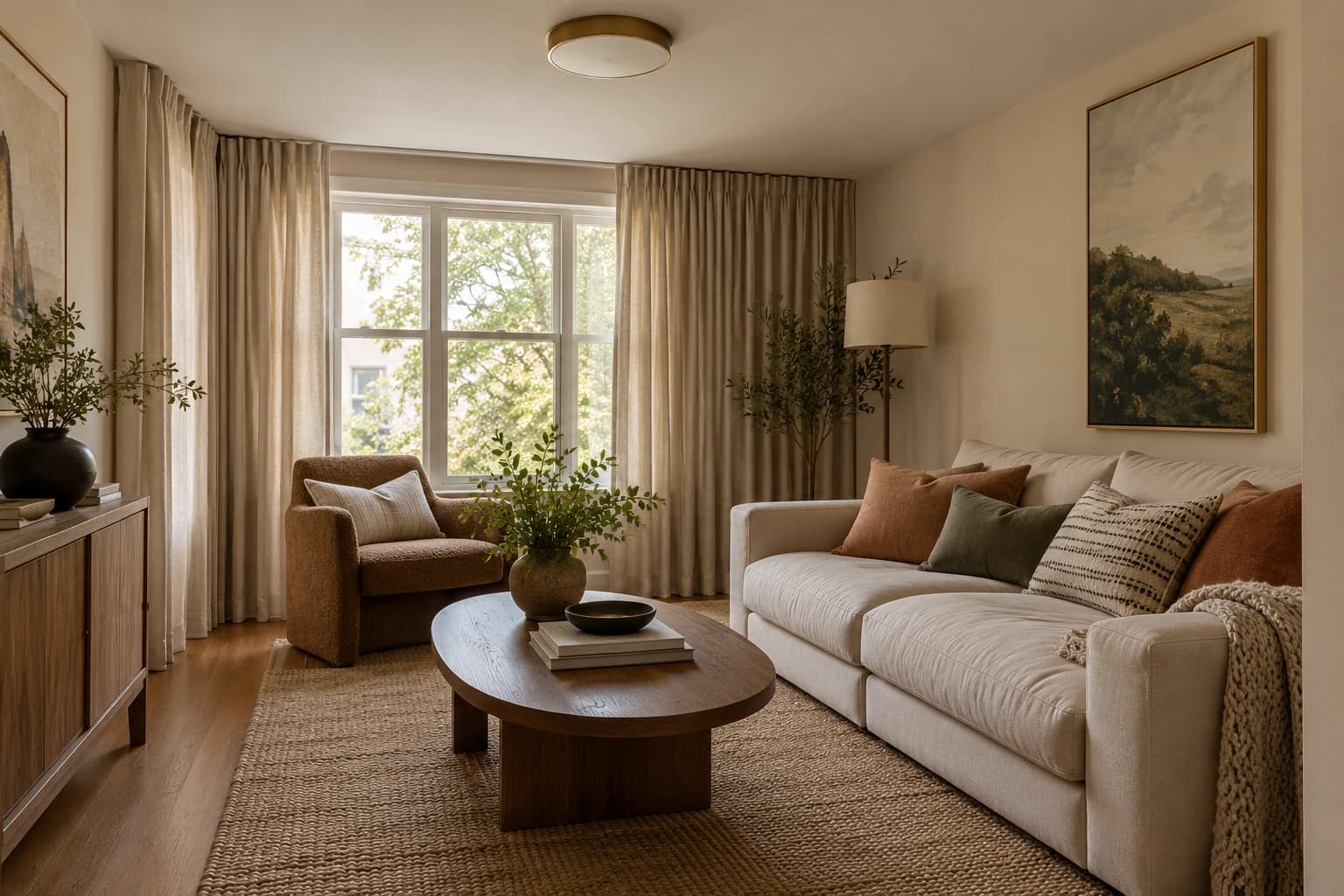
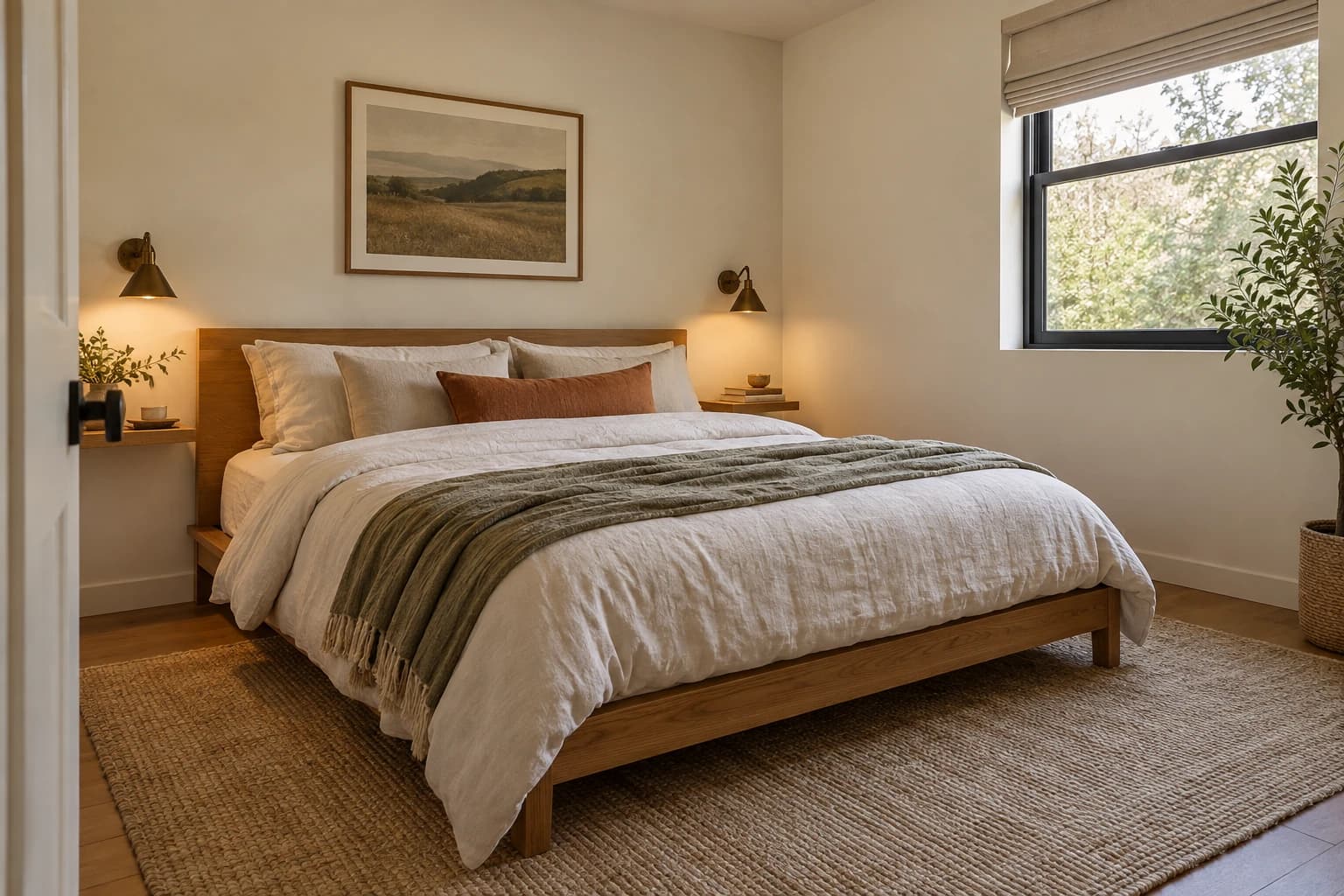
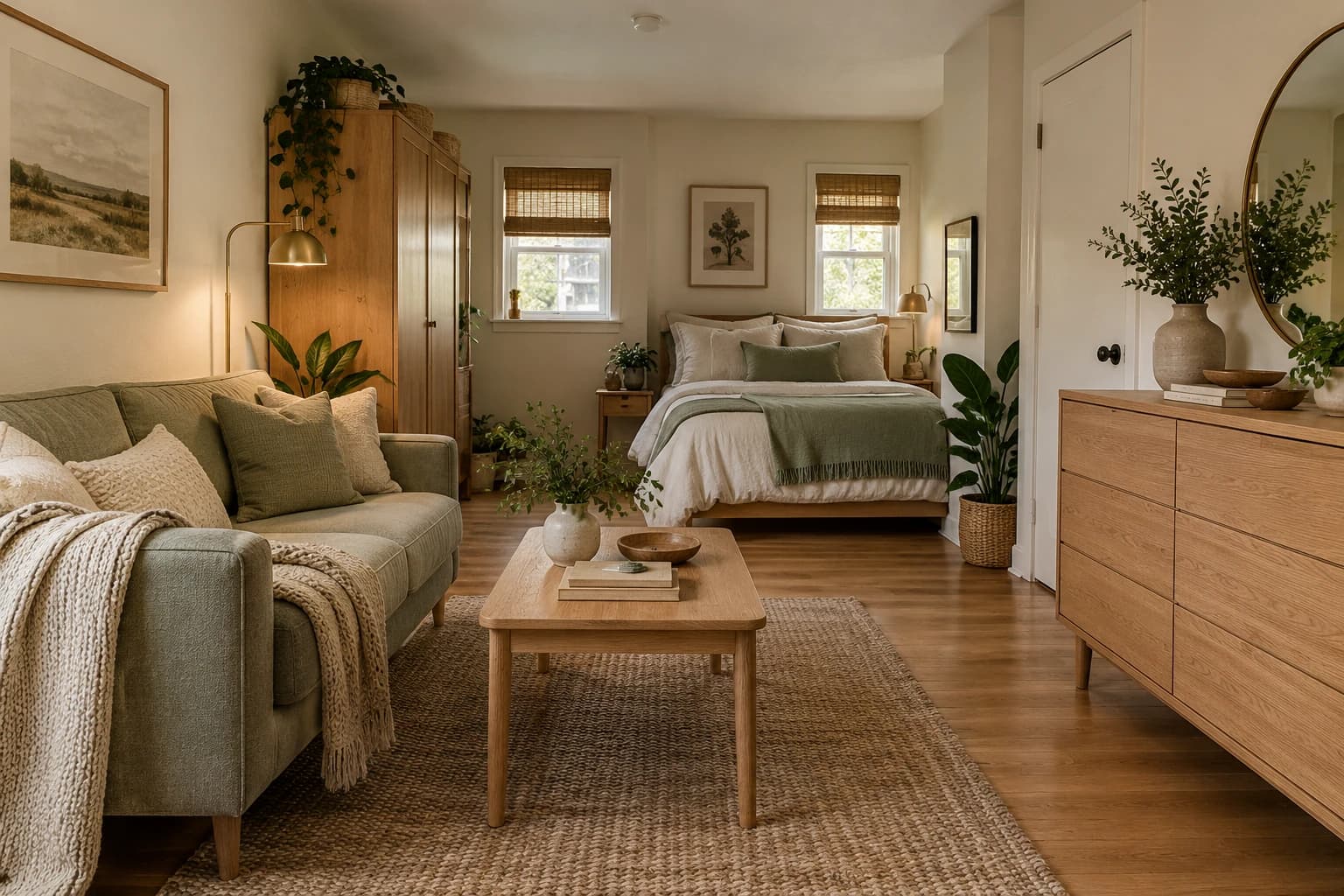
Dark paint in a small room works when the room has good daylight or well-placed lamps, when the color is applied across walls, trim and often the ceiling, and when you test the shade in your own light first. It does not work as a fix for a room with no light. Dark colors do not make a room physically smaller, but they do hide corners, which changes how the space feels. This guide expands on the question in our guide to design styles for small spaces and shows how to decide.
Do Dark Colors Make a Small Room Look Smaller?
Not necessarily. As we noted in the small spaces style guide, the belief is contested, and the room's actual size matters more than the paint color. Light colors reflect light and dark colors absorb it, so each has a different effect.
- Light colors: Bounce daylight and make walls recede, which is why they are the default for small rooms.
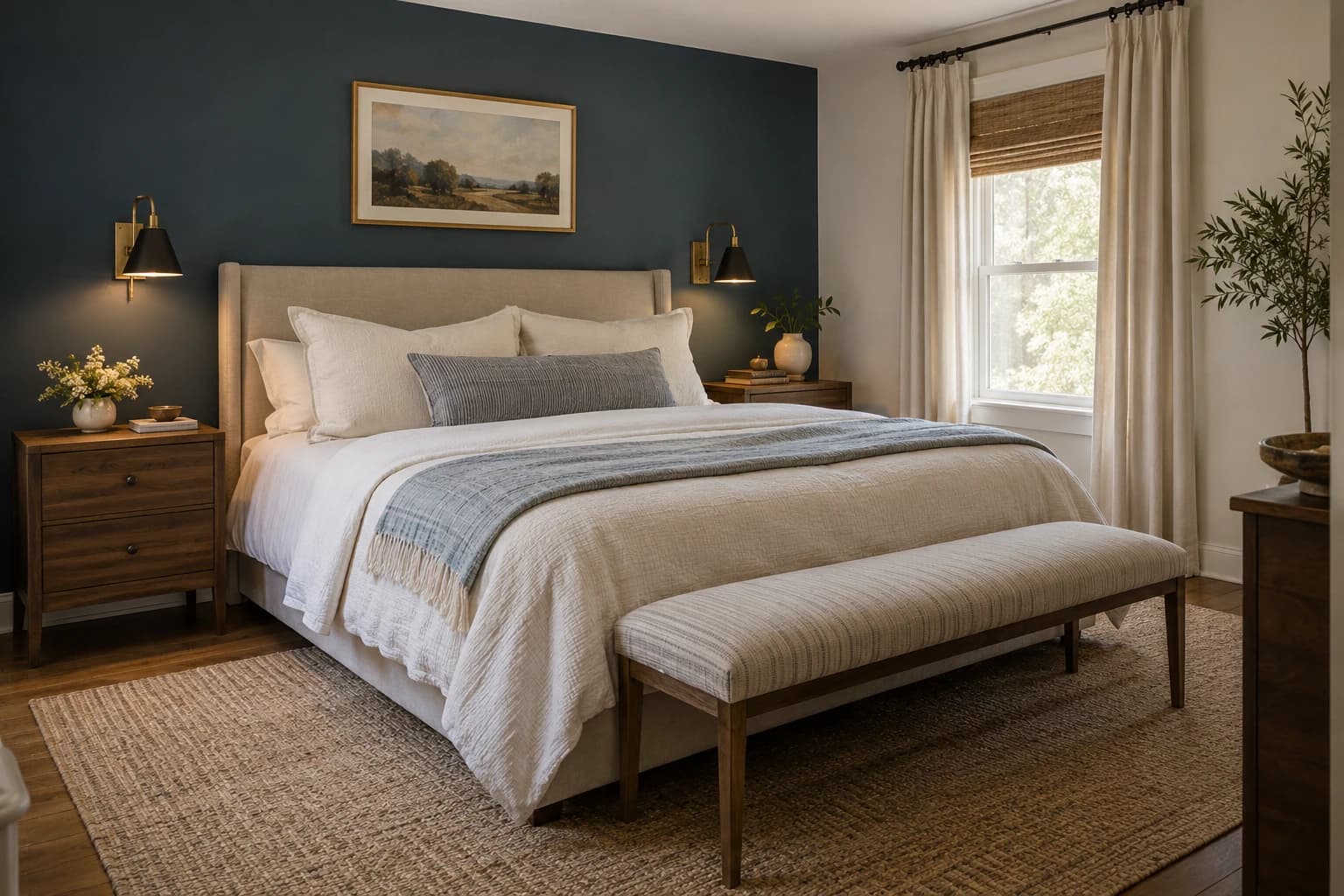
- Dark colors: Make corners and edges harder to see, so the walls can seem to fade rather than close in. Designers use this on purpose.
- The risk: A dark color in a dim room with one small window can feel heavy rather than cozy.
Light is the deciding factor, and paint makers use a number to describe it.
LRV: The Number That Explains It
Light reflectance value (LRV) is a scale from 0 (pure black) to 100 (pure white) that tells you how much light a color reflects. It is printed on many paint chips or listed on the maker's website. We use the same three bands as the seed guide, where Sherwin-Williams suggests colors above about LRV 65 for small rooms:
| LRV band | Effect | Best in |
|---|---|---|
| Above 60 | Brightens a dim room | Small rooms with little daylight |
| 40 to 60 | Balanced and calm | Rooms with good light |
| Below 40 | Cozy and enveloping | Rooms with plenty of daylight, or a deliberate moody look |
Even a very dark color reflects some light, but no paint will rescue a room with no daylight and no lamps.
Watch out for: LRV ignores undertone. A cool, low-LRV blue can look black on a gray day.
Dark Paint in a Small Room: A Decision Table
This table is our editorial judgment, based on common designer guidance, not tested results.
| Your room | Go dark? | Why |
|---|---|---|
| One large window, faces south or west | Yes | Plenty of light to carry the color |
| Two windows or a glass door | Yes | Light from two sides softens the walls |
| One small north-facing window | Be careful | Little light, and cool tones turn flat |
| No window (powder room, hallway) | Yes, on purpose | Treat it as a jewel box, with good lamps |
| A room you use mainly in the evening | Yes | Bedrooms and dens work at night |
| A room you work in all day | Probably not | Eye strain and a glare risk on glossy finishes |
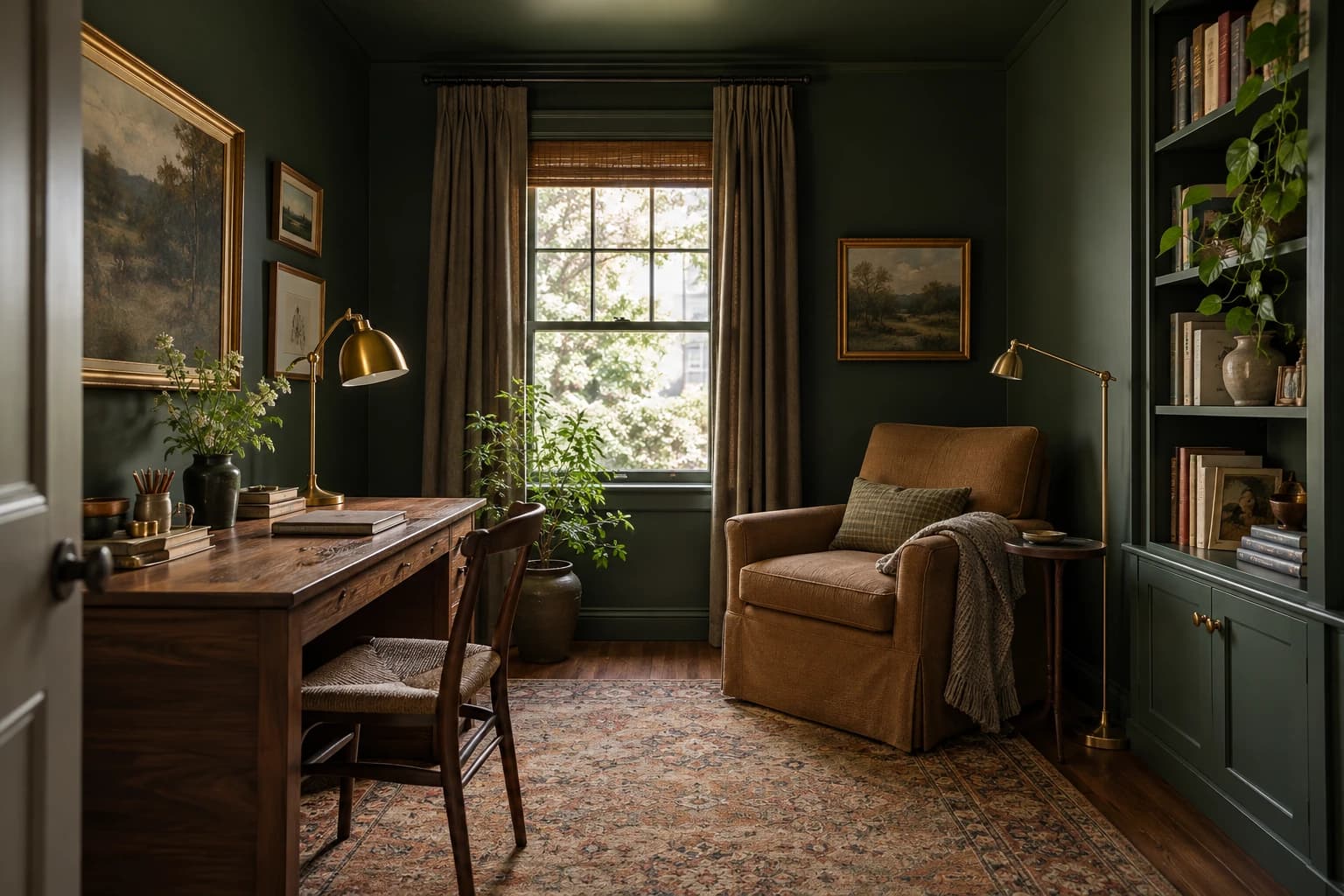
Our style guide's ninth style, the jewel box, is built on this idea. A deep green study or a navy bedroom works because the room is used with the lights on.
Is it better to paint a small room light or dark?
Neither is always better: light suits a dim room and dark suits a room with good daylight that you use in the evening. The table above shows which fits yours.
What to Do If Your Small Room Is Dark
If a small room is already dim, the safest choice is a higher LRV with a warm undertone, since pale colors reflect what daylight there is. Add lamps at three heights.
What paint color is best for a small room?
Soft whites, pale grays and gentle beiges above about LRV 65 are the safest, according to Sherwin-Williams.
What color makes a small room feel big?
A pale, warm color with a high LRV, applied to walls, trim and ceiling in similar tones, so the eye does not stop at the edges.
How to Paint a Small Room Dark Without Making It Feel Heavy
Designers who use dark colors in small rooms repeat a handful of rules.
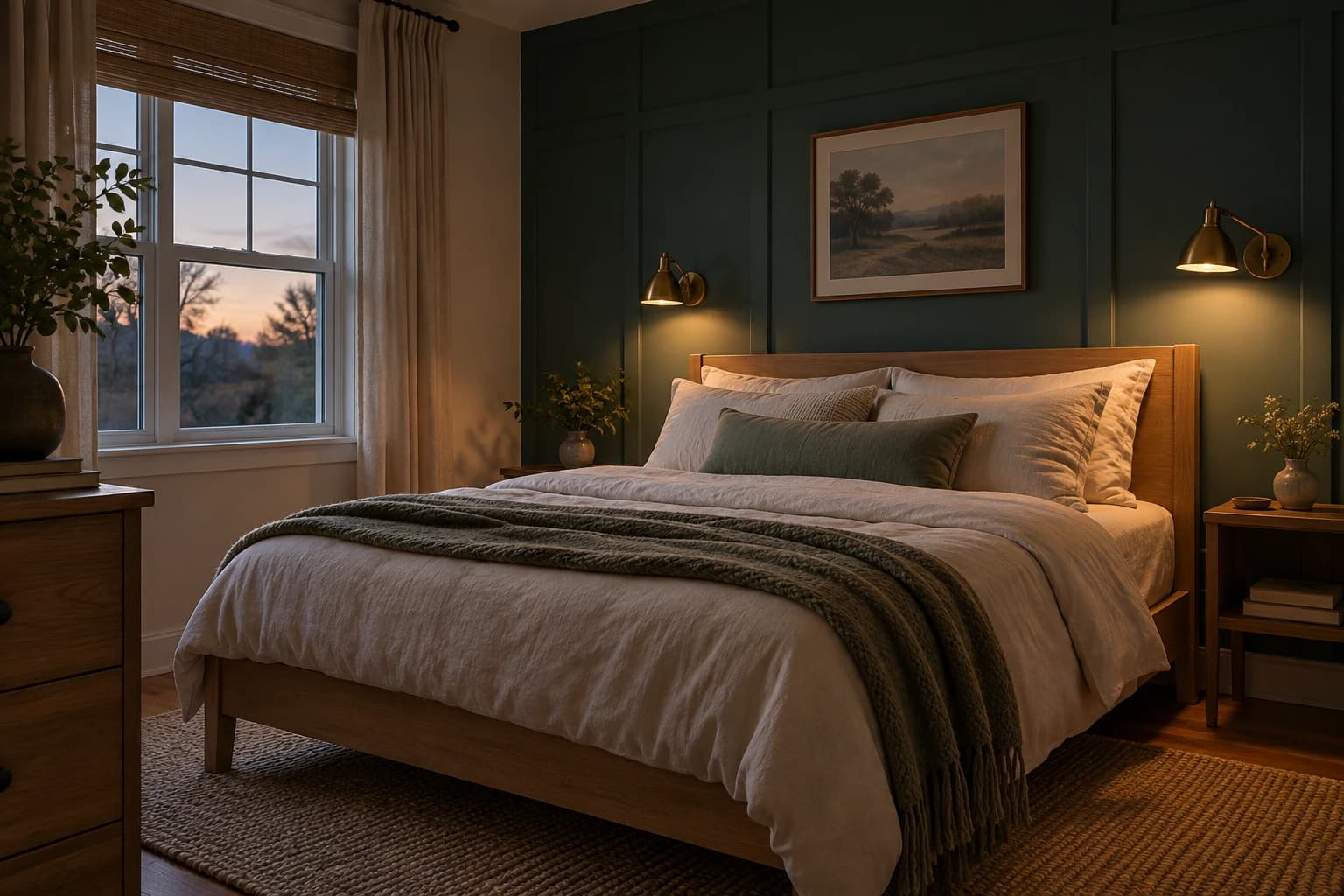
- Carry the color across walls, trim and doors: One guide notes that continuing the color onto trim and doors amplifies the boldness, and matching trim to the walls avoids a strong contrast that can make a ceiling look lower.
- Think about the ceiling: Some designers prefer a ceiling one or two tones lighter than the walls to suggest height, while others paint it the same dark color for a cocooning effect. Either can work; the lighter ceiling is the safer choice in a room with little daylight.
- Pick the sheen: Eggshell or satin finishes on walls are typical for dark colors. A high gloss shows every flaw and magnifies glare.
- Choose warm over jet black: One designer warned that a jet-black hallway felt claustrophobic. Deep green, navy or aubergine is easier to live with.
- Keep the rest of the palette to three colors: The 60-30-10 split is a common guide, with the dark wall as your dominant or secondary color.
- Test in your own light: Paint a large sample on two walls and look at it in the morning and at night.
Where Dark Paint Works Best in a Small Home
- Bedrooms: See our small bedroom decorating ideas.
- Studios, as a feature wall: One deep wall behind the bed marks the sleeping zone; see decorating a small studio apartment.
- Low ceilings: Color-drenching can make a low ceiling feel less obvious, though designers disagree; we cover both views in low ceiling decorating ideas.
The DARK Check: Four Questions Before You Open the Can
DARK is our editorial shorthand for what the designer guidance in this guide comes down to. If you answer yes to three of four, dark paint is a reasonable bet.
| Letter | Question | A "yes" looks like |
|---|---|---|
| D: Daylight | Does the room get strong natural light? | A large south or west window |
| A: Active hours | Do you use it mainly in the evening? | A bedroom, den or powder room |
| R: Reflectance | Is the LRV low, under about 40, and tested in your light? | A sample on two walls, checked morning and night |
| K: Keep it unified | Will walls, trim and doors share the color? | One continuous backdrop |
Our take: Dark paint is a lighting decision, not a color decision. The same navy that looks rich with a large window and three lamps looks heavy in a room with neither.
A note if you plan to sell: Redfin lists dark wall colors among common staging mistakes, so a deep color is a better bet in a home you will keep.
The Bottom Line
Dark paint in a small room is a good choice when the light is good, the color is applied consistently and the room is used in the evening. If the room is dim, choose a warm, light shade instead and add lamps. Test your sample before you buy gallons.
Sources
- How to Make a Room Look Bigger, Sherwin-Williams
- What Is Light Reflective Value, Homes & Gardens
- 6 No-Fail Tips for Painting with Dark Colors, Apartment Therapy
- What Is LRV in Paint, Homebuilding & Renovating
- How Design Pros Use the 60-30-10 Rule, Apartment Therapy
- 7 Common Home Staging Mistakes Sellers Make, Redfin